
Moving to Cape Coral, Florida: The Complete Relocation Guide
John Garuti Updated Jun 11, 2026 5 min read
Everything relocators need to know before moving to Cape Coral — neighborhoods by zip code, flood zones, canals, utilities, taxes, and what new construction really costs.
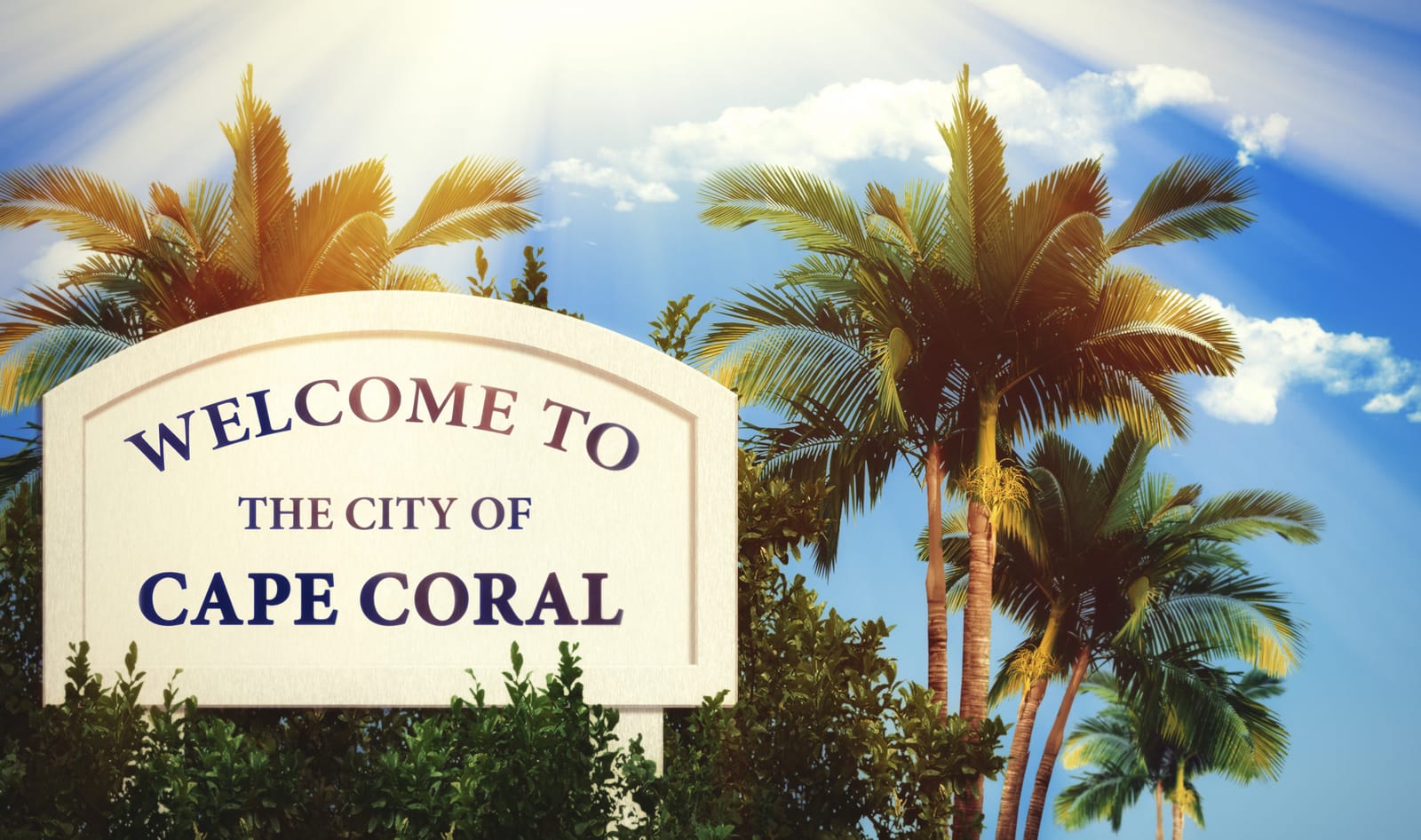
Cape Coral is one of the fastest-growing cities in America for a simple reason: it's one of the last places in coastal Florida where you can buy a brand-new home near the water at a workable price. The city has more than 400 miles of canals — more than anywhere else on earth — and a steady pipeline of new construction. As of 2026-09-06, there are 626 new-construction homes actively for sale here, with a median list price of $420K.
This guide covers what we tell every relocating buyer before they get on a plane: how the city is laid out, what the zip codes actually mean, the water/utilities/flood questions nobody explains, and how to avoid the classic out-of-state mistakes.
How Cape Coral is laid out
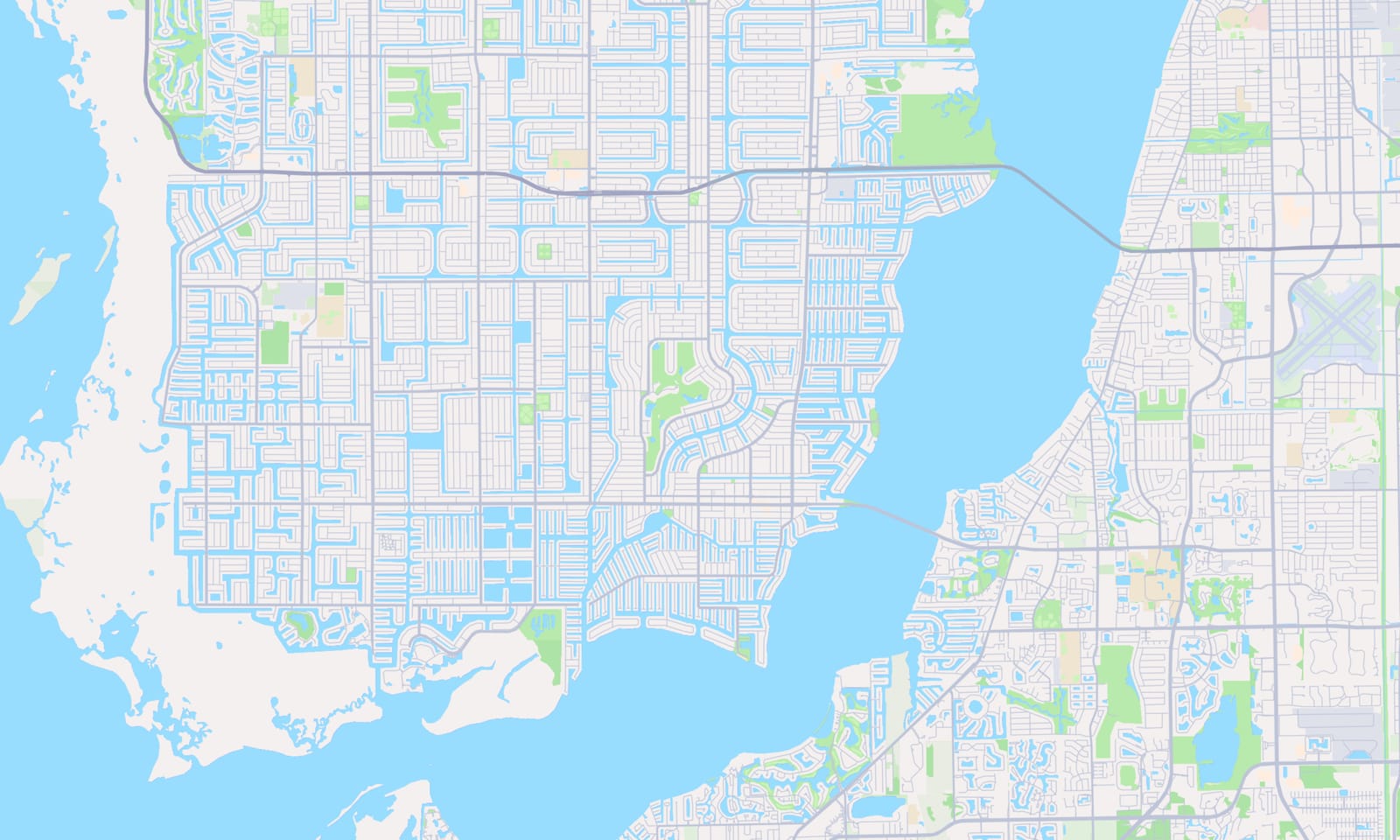
Cape Coral is a 120-square-mile peninsula, pre-platted in the 1950s–60s into a grid of quarter-acre lots. Unlike most Florida cities, it has very few large master-planned communities — the typical "neighborhood" is a quadrant of the grid, and homes are built lot by lot. That's why so much of the inventory here is new construction: builders buy individual lots and build on them continuously.
The city is divided into four quadrants — SW, SE, NW, and NE — and locals navigate by quadrant and zip code more than by neighborhood names.
| Zip | Area | Character |
|---|---|---|
| 33914 | Southwest | The premium quadrant — gulf-access canals, Cape Harbour & Tarpon Point marinas, most upscale new builds |
| 33904 | Southeast | The original Cape — established, close to the Yacht Club and downtown, mix of older homes and teardown/rebuilds |
| 33990 | Central east | Convenient, freshwater canals, strong value |
| 33991 | Central west | Newer growth, Sandoval area, freshwater canals |
| 33993 | Northwest | The growth frontier — heavy new construction, larger lots, some areas still on well/septic |
| 33909 | Northeast | Most affordable entry point, fast-growing, gated communities like Coral Lakes and Entrada |
You can browse live new-construction inventory by zip right now — for example, new builds in 33914 or new builds in 33909.
The canal system — read this before you buy "waterfront"
"Waterfront" in Cape Coral means three very different things, with very different price tags:
- Gulf-access (saltwater) canals — you can boat from your dock to the Gulf of Mexico. Closer to open water with no bridges = more valuable. This is the Cape Coral dream, concentrated in the SW and parts of the SE/NW.
- Freshwater canals and lakes — beautiful water views and kayaking, but no boat path to the Gulf. Significantly more affordable.
- Dry lots — no water. The most affordable option, and where much of the new construction in the NE and NW is built.
A gulf-access new build and a freshwater new build can look identical in photos. Always confirm which one you're looking at — search waterfront new construction here and the listing details will show the waterfront type.
Flood zones and insurance — the question every relocator asks
Much of Cape Coral sits in a FEMA flood zone, and if you finance a home in a high-risk zone (AE/VE) with a federally backed mortgage, flood insurance is mandatory. This is a budgeting item, not a reason to panic — new-construction homes are built to current elevation requirements and modern building codes, which typically makes them far cheaper to insure than older homes.
This topic deserves its own deep-dive: read our Cape Coral flood zones & insurance guide. Every listing on this site also shows its FEMA flood zone right on the detail page.
Utilities: the UEP, wells, and septic
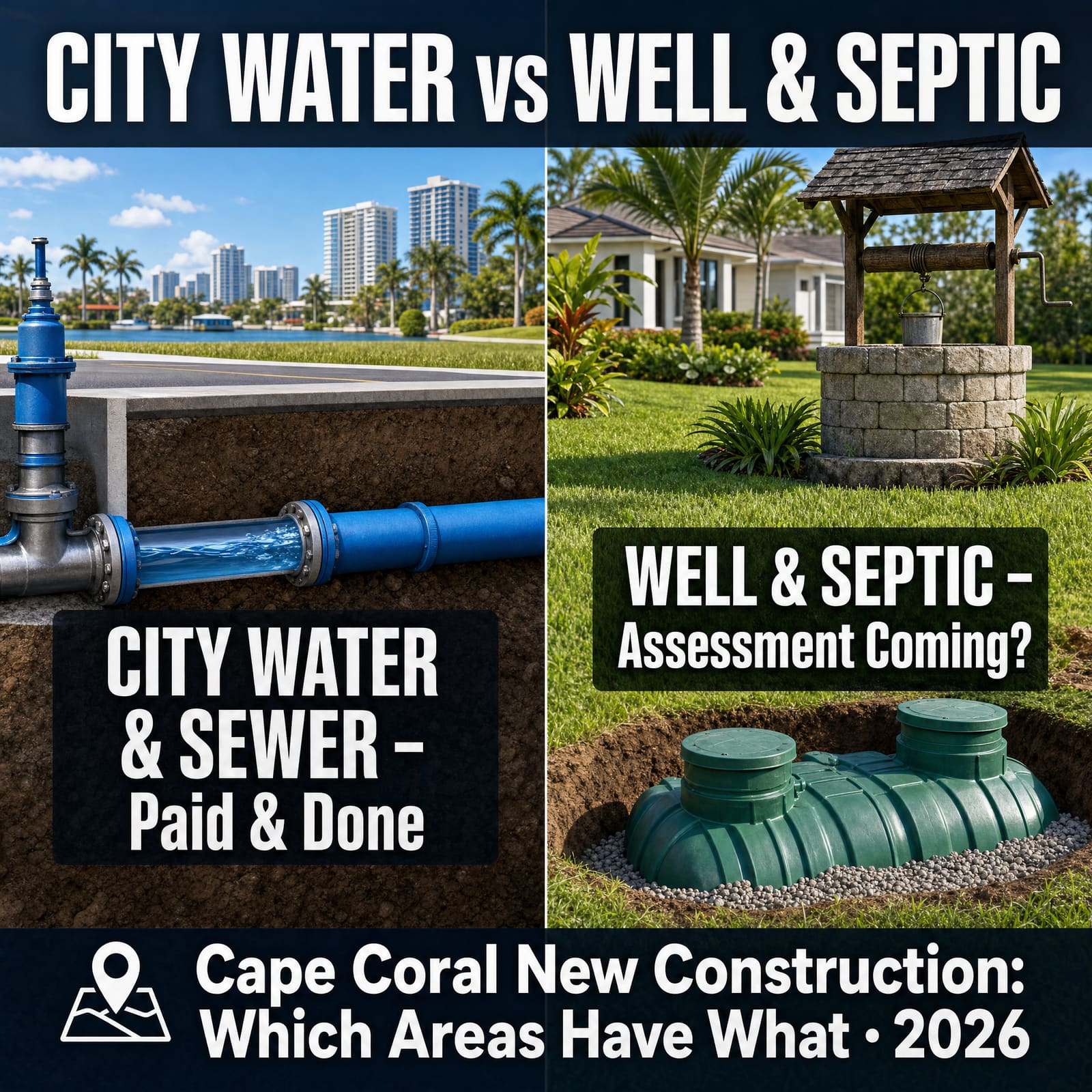
Large parts of the Cape — especially the NW and parts of the north — were platted decades before city water and sewer reached them. The city's Utilities Extension Project (UEP) has been expanding central water/sewer area by area for years, and property owners in newly connected areas pay assessments for the hookup.
What this means for a buyer:
- In already-connected areas (most of the south Cape), this is a non-issue.
- In the NW and parts of the NE, some new builds are on well and septic — perfectly normal here, but know what you're buying.
- If the UEP is scheduled for your area, budget for future assessment costs. Ask the listing agent for the current status of that specific street, and verify with the City of Cape Coral's utilities department before closing.
Taxes and ongoing costs
- Florida has no state income tax — usually the single biggest savings for relocators.
- Property taxes are based on assessed value; as a rough planning figure, budget 1.2–1.8% of purchase price annually before homestead exemption. Florida's homestead exemption and Save Our Homes cap meaningfully reduce taxes on a primary residence — file for it your first year.
- Most of Cape Coral's grid has no HOA and no CDD — a real difference from the master-planned communities elsewhere in SWFL. Gated communities (Sandoval, Coral Lakes, Entrada) do carry HOA fees.
- Budget realistically for insurance (homeowners + flood where applicable) — it's the line item that surprises out-of-state buyers most. New construction helps here: modern roofs, impact windows, and current code compliance earn meaningful discounts.
Why relocators end up choosing new construction
A new build in Cape Coral typically gets you: current hurricane code compliance (a post-Ian priority), impact-resistant windows, a new roof (the #1 driver of insurance cost), builder warranties, and no bidding against cash buyers on a 20-year-old house with an aging roof. Average price per square foot for active new construction right now is $280.
The trade-offs: construction timelines if you buy pre-completion, and the need to research builders — quality varies. Our guide to buying new construction walks the whole process, and the Cape Coral builders guide compares who's actually building here.
Further Reading
- Cape Coral Flood Zones & Insurance, Explained — the deep-dive on zones, elevation certificates, and what new construction changes.
- Buying New Construction in Cape Coral: Step-by-Step — deposits, inspections, timelines, and financing.
- Cape Coral Home Builders: The Complete Guide — who's building here and how to compare them.
- City of Cape Coral — Utilities Extension Project — official UEP status and assessment information.
- Live market data for Cape Coral — current inventory, prices, and days-on-market, updated continuously.
Frequently Asked Questions
Is Cape Coral a good place to live?
Cape Coral consistently ranks among the fastest-growing U.S. cities thanks to its boating lifestyle, no state income tax, year-round sun, and comparatively affordable waterfront property. Trade-offs include summer heat and humidity, hurricane season, and car-dependent sprawl — there's no dense walkable downtown.
How far is Cape Coral from the beach?
Cape Coral has its own small beach at the Yacht Club, but the famous Gulf beaches — Fort Myers Beach and Sanibel Island — are roughly 30–45 minutes away by car depending on where you live in the Cape and the season's traffic.
What does new construction cost in Cape Coral?
As of 2026-09-06, there are 626 active new-construction listings with a median list price of $420K and prices ranging from $1K to $6.99M. Entry-level new builds cluster in the NE (33909) and NW (33993); gulf-access new builds in the SW (33914) command the premium.
Do I need flood insurance in Cape Coral?
If your home is in FEMA zone AE or VE and you have a federally backed mortgage, yes — it's required. In zone X it's optional but often recommended. New-construction homes built to current elevation standards generally carry much lower flood premiums than older homes.
Does Cape Coral have HOAs?
Most of Cape Coral's standard grid lots have no HOA at all. Gated and master-planned communities within the Cape (Sandoval, Coral Lakes, Entrada, Cape Harbour) do have HOA fees. This no-HOA inventory is unusual for Florida and a major draw.
See every new construction home in Cape Coral — live
Straight off the Southwest Florida MLS, refreshed every 15 minutes, with the flood zone, utilities and builder on every card.
Keep reading
All guides
Moving & Relocation
Cape Coral Flood Zones & Flood Insurance, Explained
4 min read
Buyer Guides
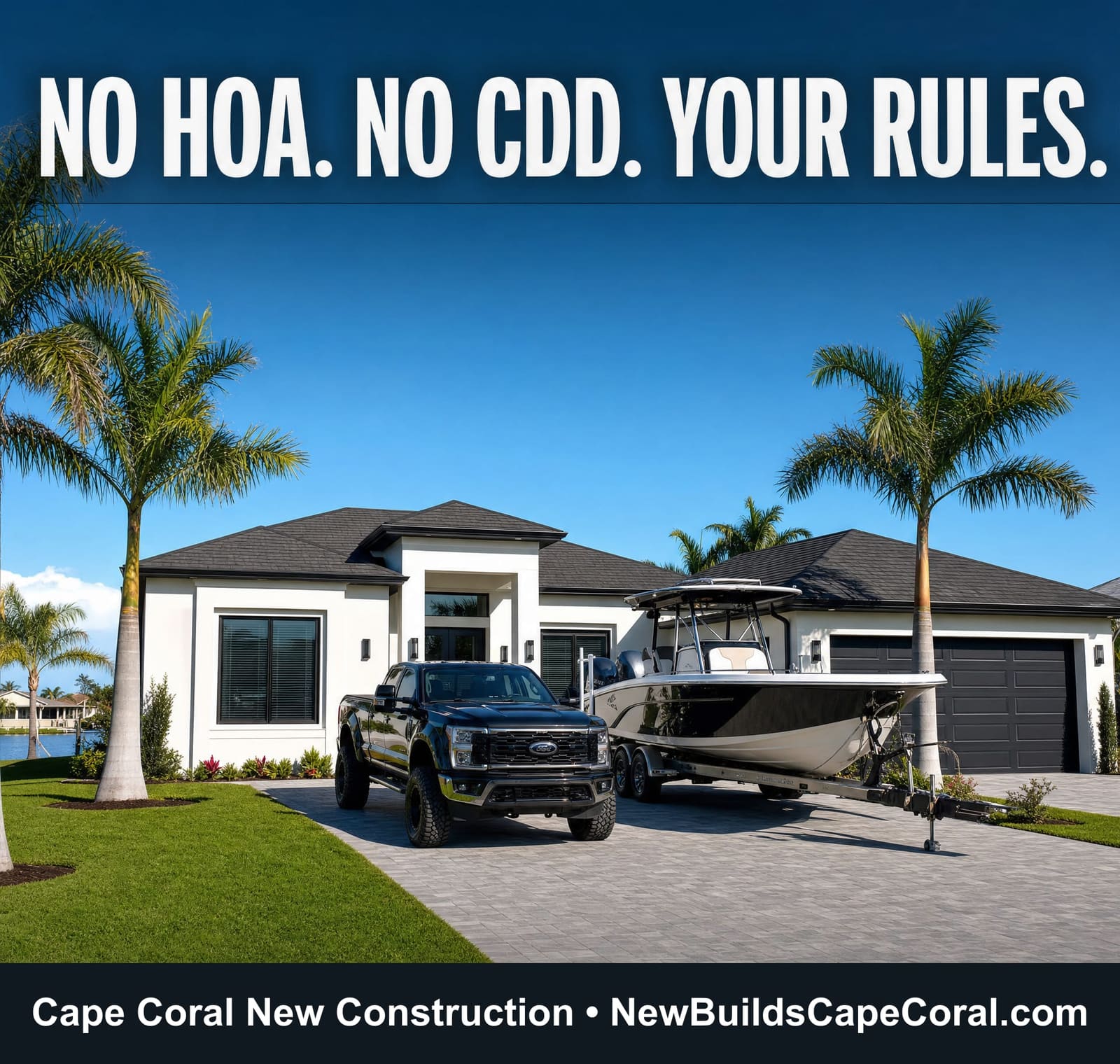
No HOA, No CDD in Cape Coral: The Freedom (and the $200–$500 a Month) Most Florida Buyers Never Get
6 min read
Buyer Guides
City Water & Sewer vs Septic in Cape Coral New Construction: Which Areas Have What (2026)
8 min read